An electrical Switch is a control device that opens, closes, or redirects an electrical circuit. It may look simple, but its internal contacts, ratings, and operating mechanism determine how it performs. The International Energy Agency’s Electricity 2024 report estimates that global electricity demand grew by 2.2% in 2023 and projects average annual growth of 3.4% from 2024 to 2026. That broader trend makes reliable control devices increasingly relevant in homes, buildings, and industrial equipment. The figures describe electricity demand, not switch sales; the distinction matters.
The right switch depends on the job. A wall-mounted rocker or toggle controls lighting, while push-button and selector switches serve control panels and machinery. Rotary switches select between circuit positions, and limit switches respond to movement, such as a machine guard reaching its stop. Smart switches add remote or automated control, but they also introduce setup and compatibility questions. Small component. Different demands.
This guide explains how switches work, compares common types, and identifies practical selection factors, including load rating, environment, mounting, and intended use. A switch that fits neatly into a box may still be unsuitable for the circuit. That detail is easy to miss. Product specifications and manufacturer instructions should guide selection, especially where heat, moisture, vibration, or frequent operation are involved. No single type is best everywhere; the useful choice is the one matched to the actual circuit and conditions.
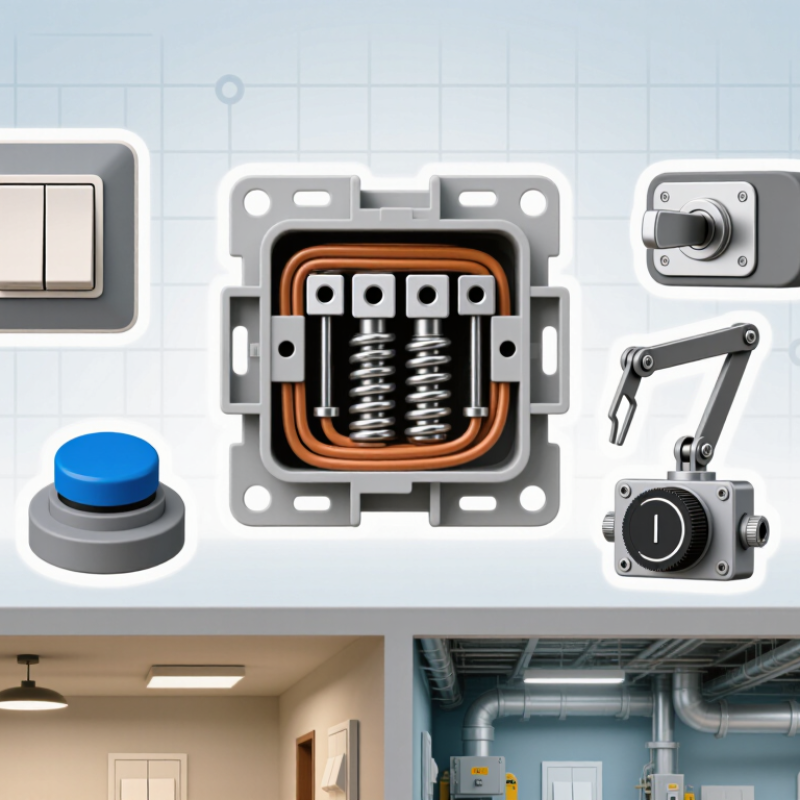
An electrical switch is a device that controls whether current can flow through a circuit. In a basic mechanical switch, moving the lever brings contacts together or separates them. When contacts meet, current can power a lamp; when they part, the circuit is interrupted. That small click matters. A wall switch usually controls one branch of a circuit, not every source of electrical power nearby. Some electronic switches also need a small standby current, so “off” does not always mean completely disconnected.
A switch seems simple, but its rating and installation matter. The National Fire Protection Association’s Home Electrical Fires report estimated an annual average of 32,620 U.S. home structure fires involving electrical distribution or lighting equipment from 2015 to 2019. This figure does not mean switches caused those fires. It does show why sound wiring and properly rated components matter. A switch must suit the circuit’s voltage, current, and load; a mismatch can cause overheating or unreliable operation. Not quite as simple as a click.
Tips: Before replacing a switch, turn off the circuit at the breaker and verify power is off with a suitable tester. Check the device rating against the circuit and connected load. If wiring is damaged, unclear, or unfamiliar, ask a qualified electrician rather than guessing.
An electrical switch controls a circuit by changing whether its conductive path is complete. In a typical wall switch, moving the lever brings metal contacts together or separates them. Closed contacts let current flow to a light; open contacts interrupt the path, and the light goes dark. That small click marks a mechanical change, not a source of electricity.
A common single-pole switch controls one circuit from one location. It is normally installed in the live conductor, so switching it off breaks the supply to the load. The neutral conductor usually remains connected. This detail matters: a dark lamp does not prove every wire inside a fixture is safe to touch. Power should be isolated and checked with suitable test equipment before electrical work.
Some switches use electronic components instead of simple contacts. A dimmer, for example, adjusts the power delivered to a compatible lamp, while a push-button switch may send a control signal. The underlying purpose is similar, but the wiring and load limits can differ. Small differences matter. I once assumed “off” meant completely disconnected; that is not always true, especially with illuminated or smart controls. Check the device instructions, and have a qualified electrician assess uncertain wiring.
An electrical switch controls whether current can travel through a circuit. Its actuator is the part a person moves or presses, such as a small toggle or a springy button. Inside, conductive contacts meet or separate to complete or interrupt the path. An insulating housing keeps those parts aligned and helps shield them from dust and accidental contact. That click matters.
In a common mechanical switch, moving the actuator shifts a contact against a fixed terminal. A spring often snaps the contact into position, reducing the time it spends between states. When contacts touch, the circuit is closed; when they separate, it is open. The principle sounds simple, but worn contacts or loose wiring can cause heat, flickering, or unreliable operation. A switch’s current and voltage ratings must suit the circuit.
Different mechanisms serve different tasks. A toggle stays in one position until moved, while a rocker pivots under a finger. A pushbutton may return when released, or remain latched, depending on its design. Limit switches respond to moving equipment, such as a cabinet door reaching its stop. Not every switch is easy to inspect once installed, so checking its markings and the equipment instructions matters before replacement. Even a firm click cannot prove that internal contacts are healthy.
Electrical switches differ by how they control a circuit and where they are used. A single-pole switch controls one light or load from one location, such as a bedroom ceiling fixture. It is a familiar choice. A double-pole switch opens two conductors at once and is used for some higher-voltage equipment, when the circuit and switch ratings match.
Three-way switches let people control one light from two locations, such as both ends of a hallway. For three or more locations, four-way switches are added between the three-way switches. Their wiring is less intuitive, so labeling wires before removal can prevent confusion.
Dimmers adjust compatible lighting levels, but not every bulb works with every dimmer. Flickering or humming can signal a mismatch, not necessarily a failed switch. Momentary switches operate only while pressed, as with a doorbell or certain controls. Toggle and rocker describe common switch shapes; either style may serve different electrical functions.
Choose a switch rated for the circuit, load, and installation environment. Check the manufacturer’s instructions. Before replacing one, turn off the circuit and verify it is de-energized with an appropriate tester. A tester can be used incorrectly, though. If the wiring, grounding, or circuit function is unclear, have a qualified electrician inspect it.
A single-pole switch is common in bedrooms and small rooms, where one switch controls a light from one location. In a hallway or stairwell, a three-way switch lets people control the same light from either end. It is useful when carrying laundry or moving through a dark space.
Small detail, big difference.
A dimmer often suits living rooms or dining areas, where softer light can reduce glare. Check that the dimmer and bulbs are compatible; some LED lamps may flicker or fail to dim smoothly.
Push-button switches appear in doorbells and other momentary controls, where pressing briefly activates a circuit. Rocker and toggle switches are found in homes and workplaces, often controlling lights or fans. In workshops, selector switches can help operators choose between settings on equipment, but the correct type depends on the machine and its electrical rating.
The label matters.
Switch placement matters too: a technically suitable switch may be awkward if it is hidden behind a door or furniture. Before replacing one, turn off power at the breaker and verify the circuit is de-energized. If wiring, ratings, or the existing setup are unclear, a qualified electrician can assess it safely.
It controls whether current can flow through a circuit. In a basic switch, contacts meet or separate. That click matters.
Not always. Some electronic switches use a small standby current, and a wall switch may control only one circuit branch.
Its rating should suit the circuit’s voltage, current, and load. A mismatch can cause overheating or unreliable operation.
It controls one light or load from one location, such as a ceiling light in a bedroom.
Three-way switches control one light from two locations, like opposite ends of a hallway. Four-way switches can add control from more locations.
No. Bulbs and dimmers must be compatible. Flickering or humming may point to a mismatch, though it does not prove the switch has failed.
Turn off the circuit at the breaker and verify the power is off with a suitable tester. A tester can be used incorrectly, so take care.
Get qualified help if wiring is damaged, unclear, or unfamiliar. Guessing can be risky, even when the switch looks simple.
An electrical switch is a device that controls whether electricity can flow through a circuit. By opening or closing the circuit, it can turn equipment on or off and help manage how electrical power is used. A Switch typically works through movable contacts that either connect to complete a circuit or separate to interrupt it. Its design may also include an actuator, housing, and terminals for connecting wires.
Electrical switches come in several forms, each suited to different tasks. Toggle, rocker, push-button, slide, and rotary switches differ in how they are operated, while specialized designs may respond to light, temperature, or movement. A suitable type depends on the circuit, the required control, and the surrounding conditions. For example, a simple wall switch offers convenient lighting control, while push-button switches are often used on control panels and rotary switches can select among multiple settings. Knowing these differences helps users choose a switch that fits its intended application.
