Choosing the right Hydraulic equipment begins with the machine’s real working conditions, not a product catalogue. Pressure and flow matter, but they do not tell the whole story. A pump that performs well in a clean workshop may struggle beside dust, heat, vibration, or water. The correct choice must match the duty cycle, load profile, operating temperature, fluid type, and available maintenance skills.
Tony Merritt, author of Hydraulic Control Systems, wrote, “The function of a hydraulic system is to transmit power.” That simple statement remains useful. It reminds engineers to examine the complete power path, from the prime mover and pump to valves, actuators, hoses, filtration, and controls. A compact excavator may need responsive valve control, while a press may demand stable force for long periods. These systems should not receive the same design.
Details often decide reliability. Check the manufacturer’s pressure rating, flow range, port size, seal compatibility, and contamination limits. Leave practical space for filter replacement and leak inspection. A perfectly sized component can still fail when maintenance access is poor. That is an uncomfortable lesson.
Selection also requires honest judgment. Lowest purchase cost can create higher energy use, noise, downtime, or replacement expense. Yet the most expensive option is not automatically the best. Compare verified performance data, supplier support, spare-part availability, and documented safety compliance. When uncertain, test the equipment under representative conditions. A small trial can expose a large mistake before installation.
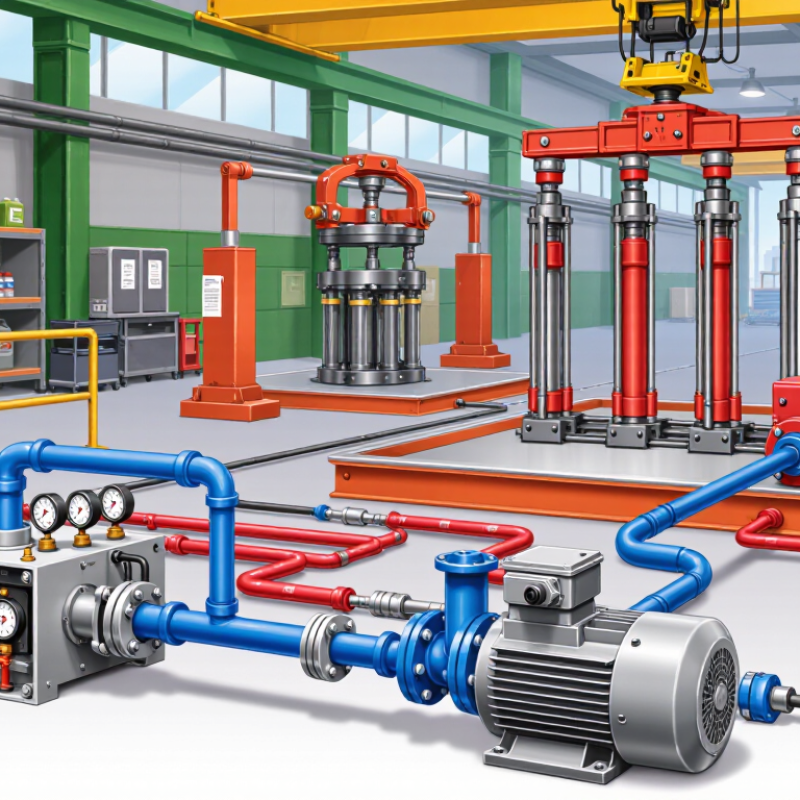
Choosing hydraulic equipment starts with defining the actual task, not browsing a catalog. Describe the load, motion, speed, and cycle frequency in measurable terms. A cylinder lifting 800 kilograms needs different control than a motor driving a conveyor. Record peak force, working pressure, flow demand, and available space. Consider the environment too: dust, moisture, temperature, and vibration can change performance. The machine may run eight hours daily. That matters. Ask whether movement must be smooth, fast, synchronized, or simply reliable. Vague requirements create expensive surprises later.
Translate the task into operating requirements. Calculate pressure from the load, then allow a sensible safety margin without oversizing everything. Excess capacity can increase heat, energy use, and cost. Check startup conditions, load-holding needs, emergency stopping, and acceptable noise. A practical test with real cycle data is more trustworthy than a perfect spreadsheet. I have seen specifications look complete while ignoring cold-start behavior. That gap can cause sluggish movement and premature wear. Recheck assumptions with operators; their observations often reveal details missing from engineering notes.
Tips: Write down the heaviest load and longest cycle. Measure temperature near the power unit. Confirm fluid cleanliness requirements. Compare normal and peak flow. Leave room for maintenance access. If data is uncertain, label it as an estimate and verify it before selection. Do not select equipment only by maximum pressure. It must fit the task, controls, environment, and maintenance skills available. A small field trial helps.
Choosing hydraulic equipment starts with the system’s real pressure, flow, and power requirements. A catalog rating alone is not enough. Measure pressure during the hardest movement, not only at idle. Measure under load. A cylinder lifting a steel fixture may need 180 bar, while its pump must deliver 28 liters per minute for the required speed. Small errors here can cause slow cycles, overheating, or unstable motion.
Hydraulic power can be estimated with this formula: pressure in bar × flow in liters per minute ÷ 600. At 180 bar and 28 liters per minute, the theoretical power is about 8.4 kW. Allow extra capacity for heat, leakage, and motor losses. The prime mover may need more than 10 kW. Select valves, hoses, filters, and fittings for the working pressure, including pressure spikes. The weakest component controls safety.
I once focused too heavily on maximum pressure and overlooked return-line restriction. The machine worked, but the oil became unusually hot after repeated cycles. That mistake changed my checking routine. I now compare pressure drop, reservoir size, oil temperature, and duty cycle before choosing equipment. Noise is evidence. Unusual pump noise can indicate aeration, poor inlet sizing, or low fluid levels. Do not guess. Record readings with calibrated gauges, then review the results with the equipment manual and a qualified hydraulic professional.
Match pressure, flow, and power to system demands
Estimated hydraulic power is calculated as pressure (bar) × flow (L/min) ÷ 600. Values show hydraulic output power; actual prime-mover input requirements are higher because of system losses. Select equipment rated for the required pressure and flow, with suitable allowance for operating conditions.
How to Choose the Right Hydraulic Equipment?
Select the Appropriate Hydraulic Equipment Type
Choosing the right hydraulic equipment starts with the machine’s required movement. Hydraulic cylinders suit controlled linear force, such as lifting a platform or clamping a fixture. Hydraulic motors fit rotary tasks, including conveyor drives and winches. Pumps create flow, while valves direct, regulate, or stop that flow. A compact power unit may work well where space and noise matter.
Check pressure and flow before comparing equipment sizes. A cylinder rated for 250 bar may not suit a system operating near that limit continuously. Leave a practical safety margin. Flow determines actuator speed, so an undersized pump can make a machine feel weak and slow. Review the duty cycle, load pattern, operating temperature, and available installation space. These details often matter more than appearance.
Real equipment selection also depends on maintenance conditions. Dusty workshops need effective filtration and accessible service points. Outdoor systems may require protection against moisture and temperature changes. I have seen a correctly sized valve perform poorly because contaminated fluid restricted its spool. The calculation was sound, but the maintenance plan was not. A first selection can still be wrong. Test the proposed configuration under realistic load conditions, inspect pressure readings, and confirm that hoses, fittings, and seals match the selected equipment type. Availability of replacement parts should also influence the decision.
| Equipment Type | Primary Function | Typical Operating Range | Best Application Fit | Main Advantages | Important Limitations | Selection Priorities |
|---|---|---|---|---|---|---|
| External Gear Pump | Converts mechanical power into hydraulic flow. | Approximately 70–250 bar; fixed displacement; low to medium flow rates. | Mobile equipment, lubrication systems, compact power units, and general industrial circuits. | Simple construction, compact size, relatively low initial cost, and good contamination tolerance. | Higher noise and lower efficiency than many piston pumps; flow is generally not adjustable. | Required pressure, flow rate, noise limit, fluid cleanliness, and duty cycle. |
| Vane Pump | Provides relatively smooth hydraulic flow for power transmission and motion control. | Approximately 70–175 bar; fixed or variable displacement; medium flow rates. | Industrial machinery requiring lower noise and smoother flow. | Lower pulsation and noise than many gear pumps; good volumetric efficiency in clean systems. | More sensitive to contaminated or poorly lubricating fluid; pressure capability is usually below piston pumps. | Noise requirements, fluid cleanliness, pressure stability, and expected operating hours. |
| Axial Piston Pump | Generates high-pressure hydraulic flow, often with variable displacement control. | Approximately 250–700 bar, depending on design; medium to high flow rates. | High-power mobile machinery, injection equipment, presses, and closed-loop hydrostatic drives. | High pressure capability, high efficiency, and excellent energy control with load-sensing or pressure-compensated designs. | Higher purchase cost, greater design complexity, and stricter cleanliness requirements. | Maximum pressure, displacement control method, efficiency, contamination level, and maintenance capability. |
| Hydraulic Motor | Converts hydraulic energy into rotary mechanical motion. | Commonly 70–350 bar; speed and torque depend on displacement and flow. | Conveyors, winches, augers, mixers, fans, and mobile drive systems. | High starting torque, flexible installation, and easy speed control through flow regulation. | Heat generation and efficiency losses can increase at incorrect speed, pressure, or back-pressure conditions. | Required torque, operating speed, displacement, starting load, case-drain needs, and allowable back pressure. |
| Hydraulic Cylinder | Converts hydraulic pressure and flow into linear force and motion. | Approximately 70–350 bar; force is determined by pressure and piston area. | Lifting, clamping, pressing, steering, forming, and linear positioning. | High force density, straightforward control, and suitability for large linear loads. | Susceptible to side loading, seal wear, buckling, leakage, and alignment problems. | Required force, stroke length, retraction speed, mounting method, rod stability, and side-load exposure. |
| Directional Control Valve | Starts, stops, and directs hydraulic flow to control actuator movement. | Commonly rated from 210–350 bar; flow capacity varies by port size and valve design. | Systems requiring extension, retraction, rotation, stopping, or actuator sequencing. | Available in manual, solenoid-operated, pilot-operated, and proportional configurations. | Incorrect sizing can cause pressure drop, heat generation, unstable motion, or insufficient response speed. | Flow rate, pressure rating, number of positions, actuator type, response time, and control signal. |
| Pressure Control Valve | Limits, regulates, or reduces hydraulic pressure to protect components and control force. | Commonly rated from 210–350 bar, with an adjustable pressure setting. | Overload protection, pressure sequencing, counterbalance control, and reduced-pressure branches. | Protects pumps and actuators while helping control system force and load behavior. | Excessive bypass flow may produce heat; incorrect adjustment can reduce performance or create unsafe motion. | Required setting, flow capacity, response characteristics, heat dissipation, and fail-safe behavior. |
| Hydraulic Filter | Removes solid particles and helps maintain hydraulic fluid cleanliness. | Selected by pressure rating, flow capacity, filtration rating, and dirt-holding capacity. | All hydraulic systems, especially those containing servo, proportional, or piston components. | Reduces component wear, supports reliable valve operation, and extends fluid and equipment life. | A clogged element increases pressure drop and may activate a bypass or reduce system performance. | Required cleanliness level, micron rating, flow, pressure, location, indicator type, and replacement interval. |
| Hydraulic Power Unit | Integrates the reservoir, pump, motor, valves, filtration, and controls into one power source. | Configured for the system’s required pressure, flow, duty cycle, and reservoir capacity. | Industrial automation, lifting platforms, presses, machine tools, and compact hydraulic systems. | Simplifies installation, reduces piping complexity, and provides centralized system control. | Poor sizing can cause overheating, insufficient flow, excessive noise, or limited expandability. | Peak and continuous flow, maximum pressure, duty cycle, motor power, reservoir volume, cooling, and service access. |
Note: Pressure and flow ranges are representative engineering ranges rather than universal limits. Final selection should be verified against the equipment datasheet, hydraulic fluid specifications, duty cycle, temperature, and applicable safety requirements.
Start with compatibility. Check the machine’s required flow rate, operating pressure, fluid type, and port sizes against the equipment specifications. A pump that fits physically may still deliver too much flow or too little pressure. That mismatch can cause sluggish movement, excess heat, or premature wear. Measure hose lengths and fitting threads, too. Small details matter.
Look beyond the specifications. Efficiency shows up in everyday operation. Compare expected output with power demand, and consider how often the system runs under heavy load. A correctly sized pump and motor can reduce wasted energy and heat. Look for clear performance data, service intervals, and accessible replacement parts. Numbers are useful, but actual duty cycles vary. A system used intermittently may not need the same setup as one running all shift.
Prioritize safety and durability. Confirm pressure ratings for every connected component, not only the main unit. Check for pressure-relief protection, secure guards, and controls that operators can reach without leaning across moving parts. Inspect seals, hose covers, and corrosion-prone surfaces for the site’s temperature and conditions. Dust, vibration, and repeated pressure changes can shorten service life. It is easy to overvalue a rugged-looking housing; internal quality is harder to judge, so request test records and maintenance guidance. And leave room for uncertainty. Real workloads rarely match a perfect catalog example.
Choosing hydraulic equipment by purchase price is risky. Installation often exposes hidden costs: flushing lines, aligning actuators, routing hoses, and adding filtration. A compact unit may need less floor space, yet cramped access can make future repairs slower. NIST Handbook 135 recommends lifecycle costing across acquisition, operation, maintenance, and disposal, not just the initial invoice.
Maintenance usually determines whether savings survive. The U.S. Department of Energy’s Operations and Maintenance Best Practices Guide reports that predictive maintenance can reduce maintenance costs by 25–30% and downtime by 35–45%. Those figures are not automatic. They depend on clean oil, accurate pressure readings, vibration checks, and trained technicians.
A five-minute leak inspection can reveal a damaged seal before oil reaches the workshop floor. Small detail.
Compare service intervals, filter prices, fluid requirements, diagnostic tools, and technician hours. Then estimate lost production during an unplanned stoppage. The calculation should include energy use, because inefficient pumps convert electrical power into heat. I have seen low-cost installations become expensive after repeated hose failures and difficult access. The spreadsheet looked convincing. It was incomplete.
Request documented test data, realistic maintenance assumptions, and a three-to-five-year ownership model before approval.
Measure pressure and flow during the hardest movement. Measure under load. Idle readings can mislead. Record calibrated gauge readings before selecting components.
Multiply pressure in bar by flow in liters per minute, then divide by 600. At 180 bar and 28 liters per minute, power is about 8.4 kW. The drive may need over 10 kW after losses.
Cylinders provide controlled linear force for lifting or clamping. Motors handle rotary tasks, such as conveyors or winches. Pumps create flow. Valves direct and regulate it.
Flow controls actuator speed. An undersized pump can make movement slow and weak. A cylinder may reach the required force but still move too slowly.
No. Continuous operation near the maximum rating can reduce reliability. Include pressure spikes and a practical safety margin. The weakest hose, fitting, or seal limits system safety.
Review available space, duty cycle, load pattern, temperature, and noise limits. A compact power unit may suit a tight area. Appearance alone proves little.
It may indicate aeration, poor inlet sizing, or low fluid levels. Noise is evidence. Do not guess. Check fluid level, inlet restrictions, and measured pressure.
Dusty workshops need effective filtration and accessible service points. Outdoor equipment needs protection from moisture and temperature changes. Replacement-part availability also matters.
Yes. Contaminated fluid can restrict a valve spool, even when sizing is correct. I once overlooked return-line restriction, causing hot oil after repeated cycles. My checking method was incomplete.
Test it under realistic load conditions. Inspect pressure drop, reservoir size, oil temperature, and duty cycle. Confirm every hose, fitting, filter, and seal matches the working conditions. Test it realistically.
Choosing the right Hydraulic equipment begins with a clear understanding of the task and operating environment. Define the required movement, load, speed, duty cycle, temperature range, and available installation space before selecting components. Then match system pressure, fluid flow, and power capacity to actual demands, allowing reasonable margins without creating unnecessary energy consumption. Depending on the application, the best solution may involve pumps, motors, cylinders, valves, power units, or an integrated system.
A suitable choice must also provide compatibility, efficiency, safety, and long-term durability. Check fluid and material compatibility, connection standards, control requirements, noise levels, and protection against heat, contamination, and overload. Finally, compare installation complexity, accessibility for maintenance, spare-part needs, expected service life, and energy use. Evaluating the total ownership cost rather than only the purchase price helps ensure reliable performance, predictable maintenance, and better value throughout the equipment’s operating life.
