Choosing a reliable Heat Exchanger manufacturer in China requires more than comparing prices or browsing polished product pages. Global buyers need evidence of engineering capability, stable production, quality control, and responsive technical support. This guide introduces ten Chinese manufacturers serving industries such as power generation, chemical processing, HVAC, food production, and marine engineering.
The selection considers product range, manufacturing experience, certification practices, export performance, customization ability, and after-sales service. We also examine practical details, including plate and tube materials, welding quality, pressure testing, surface finishing, and delivery coordination. A capable supplier should explain heat-transfer calculations clearly and provide drawings before production begins. Factory audits, inspection reports, and traceable material records can reveal more than a sales presentation.
No list is perfect. A manufacturer strong in shell-and-tube equipment may not lead in compact plate designs. Some suppliers have impressive equipment but limited experience with overseas installation conditions. Buyers should still verify references, test procedures, warranty terms, and local compliance requirements. Ask difficult questions. It saves time later.
Our research combines publicly available information with industry evaluation principles commonly used by procurement teams. Where direct performance data is limited, that limitation is noted rather than hidden. The goal is not to promote the largest name, but to help buyers identify a suitable partner for their operating conditions, budget, maintenance capability, and project risk. In a real purchase, the best choice may not be the cheapest or most famous manufacturer. Reliability is often built quietly, through consistent documentation, careful fabrication, and support after shipment.
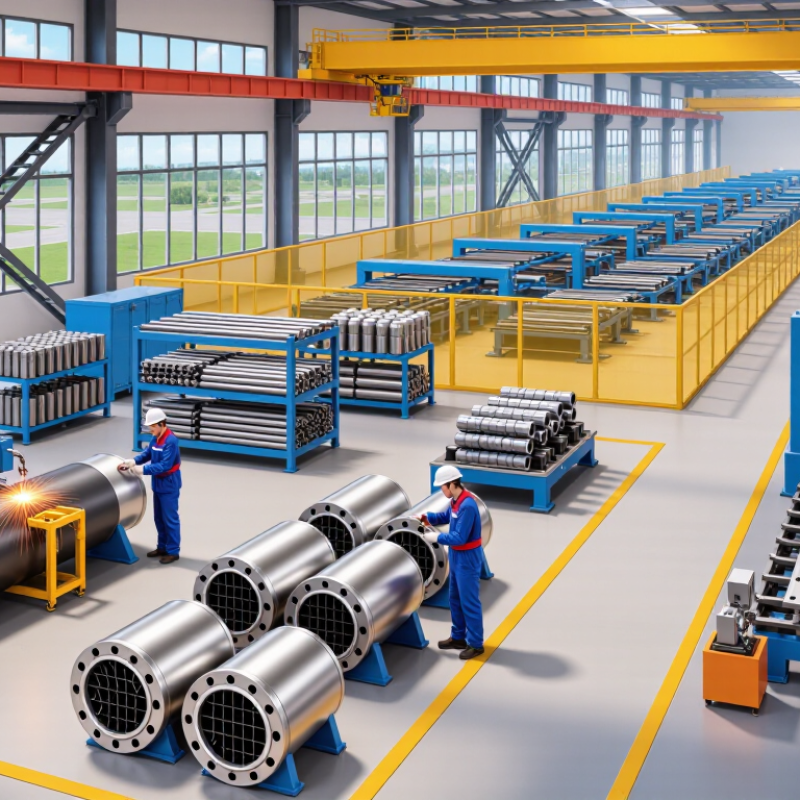
Heat exchangers move heat without mixing process fluids. The common designs are shell-and-tube, plate, and air-cooled units. Shell-and-tube equipment tolerates high pressure and dirty service. Plate units offer compact footprints and strong thermal performance. Air-cooled exchangers reduce water demand, but fan power and ambient temperature matter. Real plant selection is less tidy than a catalogue suggests.
Their five core duties are heating, cooling, evaporation, condensation, and heat recovery. The U.S. Department of Energy reports that industrial facilities can lose 20–50% of energy input as waste heat, depending on the process and equipment. That makes recovery a practical engineering target, not just a sustainability phrase. Key checks include heat duty, logarithmic mean temperature difference, overall heat-transfer coefficient, effectiveness, pressure drop, and fouling resistance. A high U-value can still disappoint when deposits narrow passages.
In field inspections, a 2-millimeter deposit layer may raise outlet-temperature drift and cleaning frequency. Water chemistry, flow velocity, vibration, and gasket condition deserve equal attention. IEA’s Energy Efficiency 2023 analysis identifies industry as a major global energy user, strengthening the case for measurable thermal savings. Yet published performance data often assumes clean surfaces and stable flows. That assumption is weak. Designers should verify readings during startup, seasonal operation, and partial load. Thermocouples can mislead when poorly positioned, so calibrated instruments and repeated measurements remain essential.
| No. | Dimension | Category | Technical Fact | Key Metric or Formula | Global Buyer Checkpoint |
|---|---|---|---|---|---|
| 1 | Heat Exchanger Type | Shell-and-Tube | A tube bundle transfers heat between fluids while one fluid flows inside the tubes and the other flows through the shell side. It is widely used for high pressure, high temperature, phase-change, and dirty-fluid services. | Heat-transfer area: A = Q ÷ (U × ΔTlm) | Confirm design pressure, design temperature, tube material, removable bundle requirements, and applicable pressure-vessel codes. |
| 2 | Heat Exchanger Type | Plate Heat Exchanger | Corrugated plates create alternating flow channels and high turbulence. The compact design generally provides a high heat-transfer area per unit of volume and allows capacity changes by adding or removing plates. | Typical advantages: compact footprint, close temperature approach, modular capacity | Check gasket compatibility, plate material, channel gap, allowable pressure drop, and cleaning access. |
| 3 | Heat Exchanger Type | Air-Cooled Heat Exchanger | Process fluid flows through finned tubes while fans move ambient air across the tube bundle. It eliminates cooling-water consumption but depends on ambient temperature and fan power. | Air-side performance is influenced by ambient dry-bulb temperature, airflow, fin efficiency, and fan power. | Verify summer design temperature, noise limits, fan redundancy, corrosion protection, and electrical requirements. |
| 4 | Thermal Duty | Heating | A hot utility such as steam, hot water, or thermal oil transfers energy to a colder process stream, increasing the process fluid temperature. | Q = ṁ × Cp × (Tout − Tin) for single-phase heating | Provide utility supply and return conditions, process flow rate, target outlet temperature, and allowable pressure drop. |
| 5 | Thermal Duty | Cooling | A cooler removes sensible heat from a process stream by using cooling water, glycol, refrigerant, air, or another lower-temperature medium. | Cooling duty is commonly stated in kW, MW, Btu/h, or refrigeration tons. | Evaluate fouling risk, minimum approach temperature, cooling-medium availability, and seasonal operating conditions. |
| 6 | Thermal Duty | Condensing | A vapor releases latent heat and changes into a liquid. Condenser design must account for desuperheating, condensation, and possible subcooling zones. | Q ≈ ṁ × Δh, where Δh is the enthalpy change across the condensing service. | Check vapor composition, condensing pressure, non-condensable gases, condensate drainage, and vacuum requirements. |
| 7 | Thermal Duty | Evaporating | A liquid absorbs heat and changes into vapor. The design is governed by boiling pressure, latent heat, circulation pattern, and dry-out or carryover control. | Q ≈ ṁ × Δh, including latent heat and any sensible-heating component. | Confirm boiling temperature, operating pressure, vapor quality, fluid compatibility, and fouling or crystallization tendency. |
| 8 | Thermal Duty | Heat Recovery | Heat is transferred from a hot process stream to a colder process stream, reducing external heating or cooling demand and improving overall energy efficiency. | Effectiveness: ε = actual heat transfer ÷ maximum possible heat transfer | Compare annual energy savings with added capital cost, pressure-drop penalties, controls, and maintenance requirements. |
| 9 | Key Thermal Metric | Log Mean Temperature Difference | The logarithmic mean temperature difference represents the effective average temperature driving force across a heat exchanger. | ΔTlm = (ΔT1 − ΔT2) ÷ ln(ΔT1 ÷ ΔT2) | Confirm whether the calculation uses counter-current or co-current flow and whether a correction factor is required. |
| 10 | Key Thermal Metric | Overall Heat-Transfer Coefficient and Pressure Drop | The overall heat-transfer coefficient combines conduction and convection resistances, while pressure drop indicates the pumping or fan-energy penalty imposed by the exchanger. | Q = U × A × ΔTlm; pressure drop is reported in Pa, kPa, bar, or psi. | Request the thermal-sizing report, fouling assumptions, velocity profile, pressure-drop margins, material certificates, and inspection records. |
Common options include gasketed plate, brazed plate, shell-and-tube, spiral, and air-cooled exchangers. Selection depends on fluid, temperature, pressure, and maintenance needs.
Stainless steel, titanium, and nickel alloys are often available. Material choice should match corrosion risk, temperature, pressure, and cleaning chemicals.
Ask for audited output, recent delivery records, inspection reports, and reference projects. A large catalog number does not guarantee fast delivery.
Manufacturers commonly serve Southeast Asia, the Middle East, Europe, North America, and Latin America. Export experience still needs project-specific verification.
Request duty, U-value, LMTD, correction factor, and pressure drop. These figures should match the exact fluids and operating temperatures.
A small terminal temperature difference reduces driving force. The exchanger may then require much more surface area.
Many industrial designs target about 0.3–1.0 bar per side. Pumps, fouling, valves, and operating costs can change this range.
Request material certificates, thermal calculations, hydrotest evidence, weld inspection records, and performance tolerances. Documents help, but they do not replace testing.
No. Certifications support procurement confidence, but design quality also depends on calculations, welds, gasket life, and delivery performance.
Do not compare U-values alone. Real plants foul, conditions change, and the cheapest quotation may cost more after commissioning.
This guide presents a practical overview of the Heat Exchanger industry in China for global buyers. It explains three common exchanger types, five major heat-transfer duties, and key thermal metrics such as duty in kW, overall heat-transfer coefficient U, LMTD, and pressure drop. It also outlines how leading Chinese manufacturers compare in product range, production capacity, customization capability, and export experience, without focusing on individual brand names.
The article further examines important compliance frameworks, including TEMA, ASME Section VIII, API 660, EN 13445, and ISO 9001. To support purchasing decisions, it introduces a buyer scorecard covering total cost, delivery time, warranty terms, technical service, lifecycle reliability, and expected return on investment. Together, these factors help engineers, distributors, and project owners evaluate suppliers systematically and select efficient, compliant, and economically suitable heat-transfer equipment for international applications.

 TorqPro Motor