Choosing the best Magnet manufacturer requires more than comparing price lists. Buyers should examine alloy quality, magnetic performance, coating control, production capacity, and traceability. A shiny sample proves little. A stable batch, tested under defined conditions, proves much more.
The International Energy Agency reported in 2024 that China produced about 94% of the world’s sintered permanent magnets. The report also noted China’s dominant position in rare-earth separation and refining. USGS data placed global rare-earth mine production near 390,000 metric tons in 2024, with China contributing roughly 270,000 tons. These figures explain why supply-chain depth matters when evaluating China’s leading suppliers.
Magnetic materials expert Dr. David Jiles states, “Magnetism is a property of matter associated with the motion of electric charges.” That principle becomes practical on a factory floor. It affects grain alignment, coercivity, temperature resistance, and final application life. However, supplier rankings are not perfect. Public data can be incomplete, and factory capabilities may change quickly. Buyers should verify ISO certifications, third-party test reports, batch records, and export experience before making a decision.
This guide examines China’s best Magnet manufacturers and suppliers through measurable criteria. It considers neodymium, samarium cobalt, ferrite, and bonded magnets. It also reviews applications, inspection methods, delivery risks, and communication quality. The strongest supplier is not always the largest. It is the one that consistently delivers the required magnetic grade, dimensions, coating, and documentation.
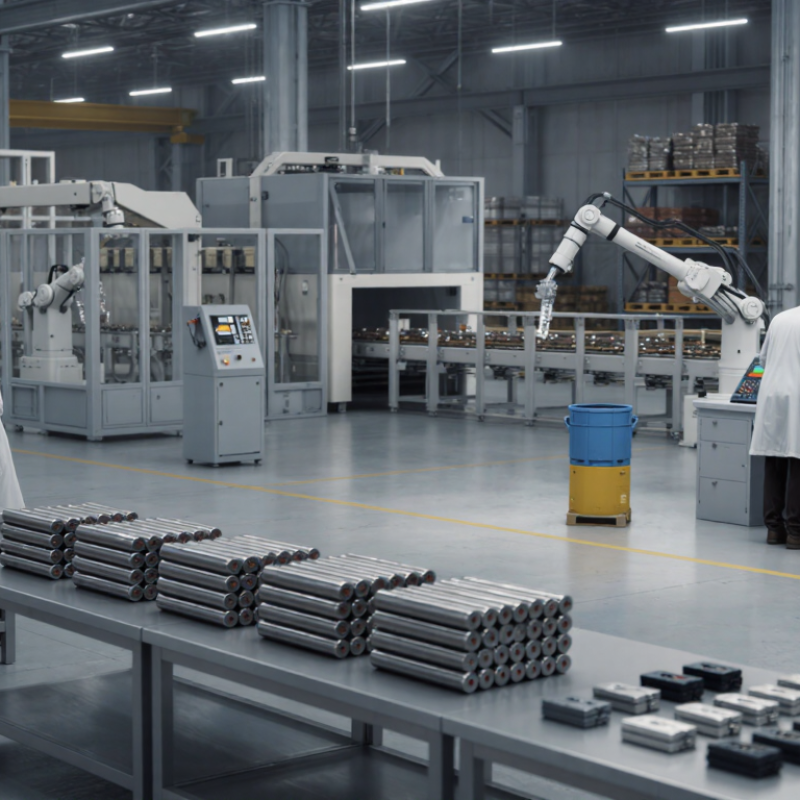
China’s magnet manufacturers produce several types for industrial, commercial, and consumer applications. Neodymium magnets offer very high magnetic strength in compact sizes. They suit motors, sensors, magnetic couplings, and lifting devices. Their nickel, zinc, or epoxy coatings help resist corrosion. However, coating quality can change after repeated moisture exposure.
Ferrite magnets cost less and tolerate heat, humidity, and rough handling. They appear in speakers, small motors, magnetic holders, and educational products. Alnico magnets perform well at higher temperatures and provide stable magnetic behavior. Their higher cost limits some high-volume uses. Samarium cobalt magnets resist heat and corrosion exceptionally well. Engineers often select them for aerospace instruments, medical equipment, and precision systems.
Manufacturers also make flexible rubber magnets for signs, seals, refrigerator panels, and display fixtures. Flexible materials are easy to cut, but they usually provide less holding force. Experienced suppliers control dimensions, magnetic direction, surface finish, and pull strength during production. They may use gauss meters, pull-force tests, and temperature checks for verification. Ask for material grades, test reports, coating details, and tolerances before approving samples. A sample can look perfect yet perform poorly after assembly. This is where careful testing matters. Even experienced buyers sometimes underestimate heat, air gaps, and side-pull forces.
| Magnet Type | Typical Material Composition | Typical Maximum Energy Product | Typical Maximum Operating Temperature | Main Advantages | Common Manufacturing Processes | Typical Applications |
|---|---|---|---|---|---|---|
| Neodymium-Iron-Boron (NdFeB) | Sintered or bonded neodymium, iron, and boron; corrosion protection is commonly added to sintered grades. | Approximately 26–56 MGOe, depending on grade and design. | Approximately 80–220°C; high-temperature grades are available with reduced magnetic performance. | Highest commercially available magnetic strength, compact size, and high force-to-weight ratio. | Alloy melting, strip casting or ingot processing, hydrogen decrepitation, jet milling, pressing, sintering, heat treatment, machining, coating, and magnetization. | Motors, generators, sensors, magnetic separators, loudspeakers, actuators, robotics, and renewable-energy equipment. |
| Samarium-Cobalt (SmCo) | Rare-earth alloy based primarily on samarium and cobalt, with small additions of other elements depending on grade. | Approximately 16–33 MGOe. | Approximately 250–350°C; the exact limit depends on grade, geometry, and operating conditions. | Excellent temperature stability, strong resistance to corrosion, and good resistance to demagnetization. | Powder metallurgy, magnetic-field pressing, sintering, heat treatment, precision grinding, coating when required, and magnetization. | Aerospace systems, high-temperature motors, vacuum equipment, medical devices, microwave components, and precision instruments. |
| Hard Ferrite / Ceramic | Primarily barium ferrite or strontium ferrite ceramic compounds. | Approximately 1–4.5 MGOe. | Approximately 180–250°C, depending on composition and application conditions. | Low cost, good corrosion resistance, good electrical insulation, and reliable performance in many general-purpose applications. | Powder preparation, wet or dry pressing, sintering, grinding, surface finishing, and magnetization. | Permanent-magnet motors, loudspeakers, magnetic holders, refrigerator magnets, pumps, and educational products. |
| Aluminum-Nickel-Cobalt (AlNiCo) | Aluminum, nickel, and cobalt alloyed with iron; copper and titanium may be included to adjust performance. | Approximately 1.5–10 MGOe. | Approximately 450–550°C, depending on grade and magnetic circuit design. | Very high temperature capability, good magnetic stability, and low reversible temperature coefficient compared with many other magnet types. | Sand casting, investment casting, sintered powder metallurgy, heat treatment, grinding, and magnetization. | Industrial sensors, measuring instruments, guitar pickups, magnetic couplings, motors, and high-temperature assemblies. |
| Bonded NdFeB | NdFeB magnetic powder combined with polymer binders such as nylon, epoxy, or other thermoplastics. | Approximately 3–14 MGOe. | Approximately 100–180°C, depending on the binder system and grade. | Complex shapes, tight dimensional control, good mechanical integrity, and suitability for automated production. | Powder blending, compression molding, injection molding, extrusion, curing, machining when necessary, and magnetization. | Small motors, encoders, sensors, automotive components, office equipment, magnetic rotors, and miniature actuators. |
| Flexible Ferrite | Ferrite magnetic powder dispersed in a flexible polymer matrix, commonly rubber, PVC, or similar elastomeric material. | Approximately 0.8–2.0 MGOe. | Approximately 80–120°C, depending on the polymer formulation. | Flexible, lightweight, easy to cut or laminate, and suitable for large-area low-force magnetic applications. | Compounding, calendaring, extrusion, sheet or strip formation, die cutting, laminating, and magnetization. | Refrigerator seals, advertising signs, flexible labels, gaskets, educational products, and low-load holding systems. |
| Plastic-Bonded Ferrite | Ferrite powder combined with a thermoplastic or thermosetting polymer binder. | Approximately 0.5–2.5 MGOe. | Approximately 100–180°C, depending on the polymer and operating environment. | Good dimensional repeatability, low eddy-current losses, corrosion resistance, and economical production of complex parts. | Injection molding, compression molding, extrusion, curing, trimming, and magnetization. | Small electric motors, pumps, sensors, magnetic rings, refrigerator components, and consumer electronics. |
| Rubber Magnet | Flexible rubber or elastomer matrix loaded with ferrite or, for higher performance, rare-earth magnetic powder. | Approximately 0.5–7 MGOe, depending on the magnetic powder and formulation. | Typically 80–150°C, depending on the elastomer and grade. | Flexible, impact-resistant, easy to process, and suitable for curved or irregular surfaces. | Mixing, calendering, extrusion, vulcanization or curing, die cutting, laminating, and multipole magnetization. | Seals, displays, magnetic closures, advertising materials, office products, and flexible sensor components. |
Note: Magnetic performance, temperature limits, coating requirements, and dimensional tolerances vary by grade, geometry, manufacturing process, and operating environment. MGOe means mega-gauss-oersted and is commonly used to express a magnet’s maximum energy product.
Common choices include ferrite, neodymium-based alloys, samarium cobalt, and AlNiCo. Each material suits different temperatures, strength levels, and operating conditions. The right choice depends on the magnetic circuit. It is not always obvious.
Production may include pressing, sintering, casting, machining, coating, and magnetization. Furnace temperature can change sintered magnet performance. Grinding requires careful control because magnets can chip easily. Small process changes matter.
Typical tests measure flux density, coercivity, temperature resistance, and pull force. Inspectors should check surface defects under strong lighting. Results should connect to specific batch records. Numbers without context are weak.
Alloy composition should be checked before production begins. Powder size and moisture can affect pressing results. Minor variations may change magnetic performance. A beautiful sample proves little.
Review incoming-material records, process controls, final inspections, and rejected-part handling. Check whether measuring equipment is calibrated. Ask how coating batches are identified. Factory photos are not enough.
No. A certificate usually describes a system or declaration. It does not prove every shipment meets your drawing. Compare test methods, sampling levels, product codes, and report dates. Independent checks may still be needed.
Confirm invoices, packing lists, origin documents, customs descriptions, Incoterms, insurance, and port responsibilities. Packaging may use plastic separators and labeled inner boxes. Air shipments may require magnetic shielding. Delivery estimates can be optimistic.
Include material grade, dimensions, tolerances, magnetization direction, coating, inspection criteria, packaging, and replacement terms. Request pilot batches before large production. Temperature exposure should match actual assembly conditions. Some requirements may need revision.
China has become a major source of magnets for industries such as electronics, renewable energy, automotive manufacturing, medical equipment, and industrial automation. Chinese manufacturers produce various types, including neodymium, ferrite, samarium cobalt, alnico, flexible, and customized magnetic components. Their production commonly involves material selection, alloy preparation, molding, sintering or bonding, machining, magnetization, surface treatment, and performance testing. Buyers should review dimensional accuracy, magnetic strength, temperature resistance, coating quality, consistency, and quality management procedures before selecting a supplier.
Suppliers are concentrated in several industrial regions, with different areas specializing in raw materials, permanent magnets, soft magnetic components, or precision assemblies. When evaluating potential partners, buyers should consider technical capability, production capacity, communication, sample approval, inspection systems, lead times, packaging, and after-sales support. Export experience, reliable documentation, and certifications related to quality, environmental management, and product safety can also reduce purchasing risks. A clear technical specification and transparent agreement on testing, tolerances, delivery terms, and compliance requirements are essential for successful international cooperation.

 TorqPro Motor