Battery sourcing is no longer just a question of price or production volume. Global buyers also weigh chemistry, safety testing, manufacturing capacity, delivery schedules, and long-term support. A low quotation can look attractive, yet freight costs, warranty terms, or inconsistent documentation may change the final calculation. Details matter.
This guide to the 2026 top battery manufacturers introduces companies that buyers may encounter across electric vehicles, energy storage, consumer electronics, and industrial applications. It considers publicly available information about product portfolios, production scale, research investment, and international reach. These indicators help frame a comparison, but they do not guarantee that a supplier suits every project. Requirements differ. A grid-storage developer may prioritize cycle life and service coverage, while an electronics company may need compact cells and steady batch consistency.
For a practical assessment, buyers should compare specifications against actual operating conditions, then request current test reports, sample results, and clear warranty language. A factory’s quoted capacity is useful, but it does not always show how much suitable output is available for a particular order. That distinction is easy to miss. Rankings also shift as technology, ownership, and production plans change, so any shortlist deserves fresh verification before a contract is signed. The comparisons here offer a starting point, not a substitute for technical review or supplier due diligence. Some data may be difficult to compare directly; that limitation is worth keeping in view.
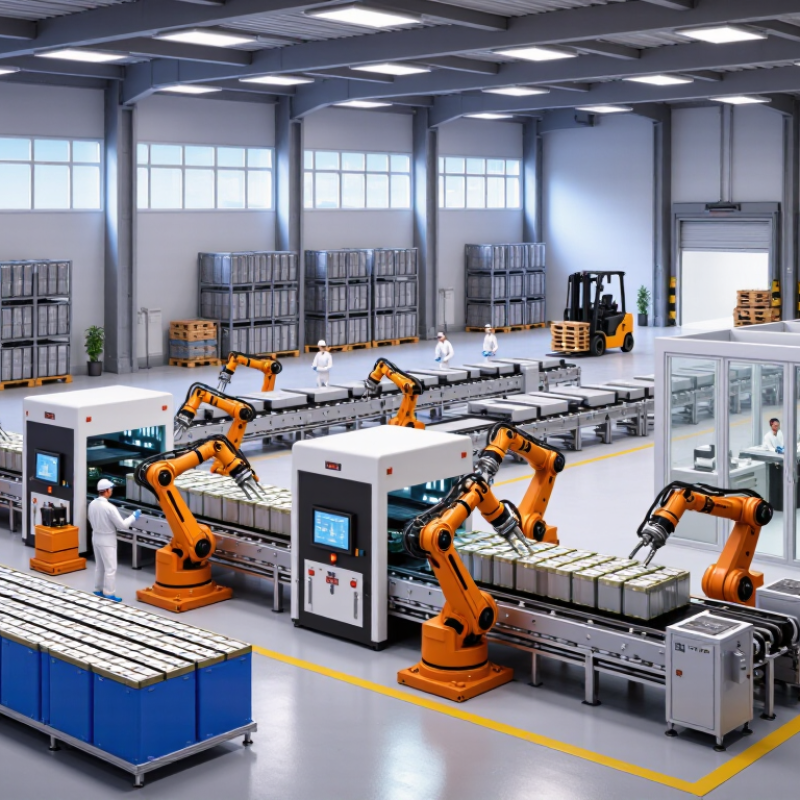
Battery manufacturing is more than cell assembly. It combines electrode coating, drying, calendering, cell formation, and strict quality checks. Small variations in coating thickness can affect capacity and service life. For global buyers, factory capability matters as much as a chemistry label.
Lithium iron phosphate (LFP) suits many cost-sensitive applications and avoids nickel and cobalt in its cathode. Nickel-rich chemistries can offer higher energy density, while sodium-ion cells are emerging for selected stationary uses. Solid-state remains a developing option, not a universal near-term substitute. Cell formats also matter: cylindrical, prismatic, and pouch designs differ in packaging, cooling, and integration needs. The International Energy Agency’s Global EV Outlook 2024 reports that global battery manufacturing capacity reached 2.2 terawatt-hours in 2023, more than twice electric-vehicle battery demand. That figure signals scale, not guaranteed quality. A simple ranking can mislead. I would still ask suppliers about production yield, traceability, cycle-life test conditions, and performance across real operating temperatures. Those details are easy to overlook.
For global battery buyers, supply-chain visibility matters as much as quoted price. The International Energy Agency reported that China held about 85% of global battery-cell manufacturing capacity in 2023. That concentration can affect lead times, material sourcing, and exposure to shipping delays. The IEA’s Global EV Outlook 2024 also estimated that electric-vehicle battery demand reached roughly 750 GWh in 2023, up about 40% year over year. Buyers should ask suppliers to map cell, cathode, anode, and assembly origins, then verify the records. A tidy spreadsheet is useful, but it can still miss a weak link.
Standards help make comparisons more reliable, but they do not replace due diligence. IEC 62660 covers performance and reliability testing for lithium-ion cells used in road-vehicle propulsion. UN Manual of Tests and Criteria, section 38.3, addresses battery transport testing. Requirements differ by product and market, so request test reports for the exact cell or pack configuration—not merely a general certificate. Check test dates, sample identification, and whether design changes occurred afterward. Small detail. Big consequence.
Tips: Ask for a traceability map, recent independent test reports, and written change-control procedures. Compare warranty terms and batch-level quality data, too. If a supplier cannot explain a missing document clearly, pause and investigate; procurement teams sometimes move too fast.
Battery manufacturers in 2026 are focusing on different needs, not one universal definition of a better cell. Some prioritize lithium iron phosphate for cost control and frequent charging. Others develop nickel-rich chemistries where higher energy density matters, such as in long-range vehicles. Industrial suppliers often emphasize dependable output, predictable service life, and cells that fit existing equipment. The trade-offs remain. Buyers should compare usable capacity, warranty terms, and performance across realistic temperatures, not rely on headline figures alone.
Manufacturing attention is also shifting toward pack integration and quality control. Precise electrode coating, consistent cell formation, and careful thermal design can affect safety and service life. For a warehouse fleet, a battery that handles repeated short charges may matter more than maximum range. For a remote solar installation, documented cycle life and accessible maintenance support deserve close review. These details are measurable. Ask for test conditions, degradation data, and traceable specifications before comparing suppliers. Recycling plans and material sourcing also deserve scrutiny, although public information can be uneven. A polished specification sheet is useful, but it cannot show every factory-floor variation. That is not glamorous. It is worth remembering.
For global buyers in 2026, comparing battery manufacturers means looking beyond headline capacity. Annual output figures show scale, but not how much production is available for your order. Ask about current utilization, expansion timelines, and the capacity reserved for different cell formats. A supplier making millions of cells may still have limited room for a custom project. Numbers need context.
Markets matter, too. Check whether a manufacturer regularly serves your destination and can provide clear documentation, shipping plans, and warranty terms. Then compare capabilities: cell chemistry, pack integration, testing procedures, traceability, and engineering support. Request recent quality data and sample specifications, not just a polished presentation. In practice, small differences in operating temperature or cycle-life testing can affect product fit. I would not treat one impressive specification as proof of overall reliability.
Tips: Match stated capacity to your forecast and order schedule. Ask for a sample production plan. Confirm who handles technical issues after delivery. One detail is easy to miss: support response times should be agreed upon in writing. Companies can look similar on paper, and that is where a careful review helps.
| Rank | Manufacturer | 2024 EV Battery Installations | Share of Global EV Battery Installations | Regional Market Footprint | Publicly Documented Capabilities | Buyer Considerations |
|---|---|---|---|---|---|---|
| 1 | Manufacturer A | Approximately 339 GWh | 37.9% | Strongest in China; also supplies vehicles and customers in multiple overseas markets. | Large-scale LFP and nickel-based chemistries; cell-to-pack and cell-to-chassis approaches; energy-storage products. | Broad product range and scale; assess local supply, export exposure, and project-specific qualification. |
| 2 | Manufacturer B | Approximately 154 GWh | 17.2% | High-volume domestic vehicle market, with growing overseas vehicle and battery activity. | LFP-focused battery systems, including long-blade cell formats; vertically integrated vehicle and battery operations. | Integration can support cost and supply coordination; verify third-party cell availability and regional service arrangements. |
| 3 | Manufacturer C | Approximately 96 GWh | 10.8% | Established supply in South Korea, North America, Europe, and Asia. | NMC and other lithium-ion formats; pouch and cylindrical products; expanding LFP offerings and regional manufacturing. | Global production footprint; compare factory qualification status, chemistry availability, and regional sourcing rules. |
| 4 | Manufacturer D | Approximately 39 GWh | 4.4% | Primarily China, with overseas customers and international expansion activity. | LFP and nickel-based lithium-ion cells; products for electric vehicles and energy storage. | Assess actual plant capacity, customer references, and delivery track record for the intended market. |
| 5 | Manufacturer E | Approximately 39 GWh | 4.4% | South Korea, Europe, North America, and other vehicle-export markets. | Primarily high-nickel lithium-ion cells; pouch-format products and manufacturing investment in overseas markets. | Check planned versus operational capacity and confirm chemistry, qualification, and delivery schedules by site. |
| 6 | Manufacturer F | Approximately 35 GWh | 3.9% | Japan, North America, and international automotive supply chains. | Automotive lithium-ion cells, including high-energy nickel-based chemistries; cylindrical-cell manufacturing expertise. | A long automotive supply history; confirm product format, available capacity, and location-specific sourcing conditions. |
| 7 | Manufacturer G | Approximately 33 GWh | 3.6% | South Korea, Europe, North America, and selected Asian markets. | Premium automotive lithium-ion cells, including high-nickel chemistries; cylindrical and prismatic development. | Compare product availability and expansion timelines; validate commercial terms and supply allocation. |
| 8 | Manufacturer H | Approximately 30 GWh | 3.3% | China-centered production and customer base, with overseas expansion. | LFP and nickel-based cells; products serving electric vehicles and energy storage. | Review project references, certification requirements, warranty coverage, and local technical support. |
| 9 | Manufacturer I | Approximately 20 GWh | 2.3% | China and international automotive and energy-storage markets. | LFP and nickel-based lithium-ion cells; cylindrical and other formats; vehicle and storage applications. | Match cell format and certification to the application; verify production location and support capabilities. |
| 10 | Manufacturer J | Approximately 19 GWh | 2.1% | China-led operations with international customer and manufacturing activity. | Lithium-ion products for electric vehicles and energy storage, with LFP and nickel-based offerings. | Confirm independently verified performance data, warranties, and the scale of operational—not announced—capacity. |
Methodology: Rankings and figures refer to 2024 electric-vehicle battery installations, not factory nameplate manufacturing capacity. Values are rounded; market share is based on global EV battery installations. Manufacturer labels are anonymized, and qualitative market-footprint and capability descriptions summarize publicly documented activities. Source for installation rankings: SNE Research, 2024 global EV battery usage data. Buyers should verify current plant-level capacity, product qualification, and regional availability directly before procurement.
Global buyers evaluating battery suppliers should look beyond the quoted price. Ask how capacity figures were measured, under which test conditions, and whether results cover the exact cell or pack configuration you plan to purchase. Request recent third-party test reports, production-quality records, and clear traceability from incoming materials to finished units. Compare warranty terms carefully: exclusions, response times, and replacement procedures matter when equipment is already installed. A factory visit can reveal practical details, such as how test data is logged or how rejected cells are separated. Small inconsistencies matter. One missing record may be a clerical error, but repeated gaps deserve investigation.
Supplier risk also includes delivery reliability, financial resilience, and dependence on a narrow set of material sources. Ask for realistic lead times and evidence that planned output matches current production capacity. Agree on inspection points before shipment, define acceptable defect rates, and document how quality issues will be handled. Keep a second qualified source where feasible; switching suppliers later can be costly. Check whether local service teams can support installation and troubleshooting, rather than relying only on remote promises. A detailed scorecard helps, though it cannot predict every disruption. Buyers may still face uncertainty, especially when forecasts change faster than supplier plans.
Supply-chain visibility can reveal sourcing risks and shipping delays. China held about 85% of global battery-cell capacity in 2023. Ask for origins of cells, cathodes, anodes, and assembly. A spreadsheet can still miss a weak link.
Request recent reports for the exact cell or pack configuration. Check test dates, sample identification, and later design changes. A general certificate may not cover your product. Small detail. Big consequence.
IEC 62660 covers performance and reliability testing for road-vehicle lithium-ion cells. UN transport testing is addressed in section 38.3 of the Manual of Tests and Criteria. Requirements vary by product and market.
Compare usable capacity, warranty terms, and performance at realistic temperatures. Lithium iron phosphate can suit frequent charging and cost control. Nickel-rich chemistries may support higher energy density. No chemistry wins every job.
Electrode coating, cell formation, and thermal design can affect quality and service life. Ask for test conditions, degradation data, and traceable specifications. A polished sheet cannot show every factory-floor variation.
Annual output does not show how much production is available for your order. Ask about utilization, expansion timelines, reserved capacity, and cell formats. Request a sample production plan. Numbers need context.
Confirm the supplier serves your destination and can provide clear documentation, shipping plans, and warranty terms. Agree on technical support response times in writing. Easy to overlook.
For warehouse fleets, repeated short-charge performance may matter more than maximum range. For remote solar systems, review cycle-life data and maintenance support. I may be overcautious, but headline figures are not enough.
Battery manufacturing spans a range of technologies, chemistries, and product types, each designed for different performance, cost, safety, and application needs. Understanding how materials, components, and finished products move through global supply chains can help buyers assess quality and consistency. Industry standards also provide a common basis for evaluating performance, production practices, and product suitability across markets.
In 2026, leading manufacturers are likely to differ in their areas of focus, production capacity, target markets, and technical capabilities. Global buyers can compare suppliers by examining product specifications, manufacturing scale, quality controls, delivery reliability, and support. A careful evaluation process, combined with clear communication and contingency planning, can help buyers manage supply, performance, and sourcing risks while selecting a Battery supplier that fits their requirements.